
Head Massage for Kids: A Gentle Approach to Relaxation
Let’s cut through the noise. You’re not here because you want to read a parenting blog. You’re here because your kid’s been tossing and turning all night, or screaming through bedtime like a banshee with a toothache. And you’ve tried everything - white noise, warm milk, reading aloud until your voice gives out. Nothing sticks. But you heard whispers - head massage - and now you’re wondering if it’s real, or just another wellness fad sold by influencers with too much coconut oil and zero kids.
Here’s the truth: head massage for kids isn’t magic. It’s biology. And it works - if you do it right.
What Exactly Is a Head Massage for Kids?
It’s not a spa session. It’s not a tantrum-avoidance trick. It’s a simple, rhythmic touch on the scalp, temples, and back of the neck - done slowly, softly, and consistently. No oils. No candles. No chanting. Just your hands, your breath, and your kid’s tired little brain.
Think of it like this: their nervous system is still wiring itself. Every loud noise, every school stress, every overstimulating screen is like a fire alarm going off in their skull. A gentle head massage? That’s the fire alarm being turned off. Quietly. Deliberately.
Studies from the Touch Research Institute at the University of Miami show that children who receive daily scalp massages for 15 minutes over 10 days report a 30% drop in stress markers. Their cortisol levels? Lower. Their sleep latency? Cut in half. And yes - that’s real data, not TikTok fluff.
How to Get It Done (Without Screwing It Up)
You don’t need a certification. You don’t need a course. You just need five minutes and a calm mind.
Here’s how:
- Wait until they’re calm - not when they’re bouncing off the walls. Post-bath, pre-bed, or after a quiet car ride. That’s your window.
- Sit beside them. No pressure. Let them lean into you. If they’re too wired, start with just one hand on their shoulder. Build trust first.
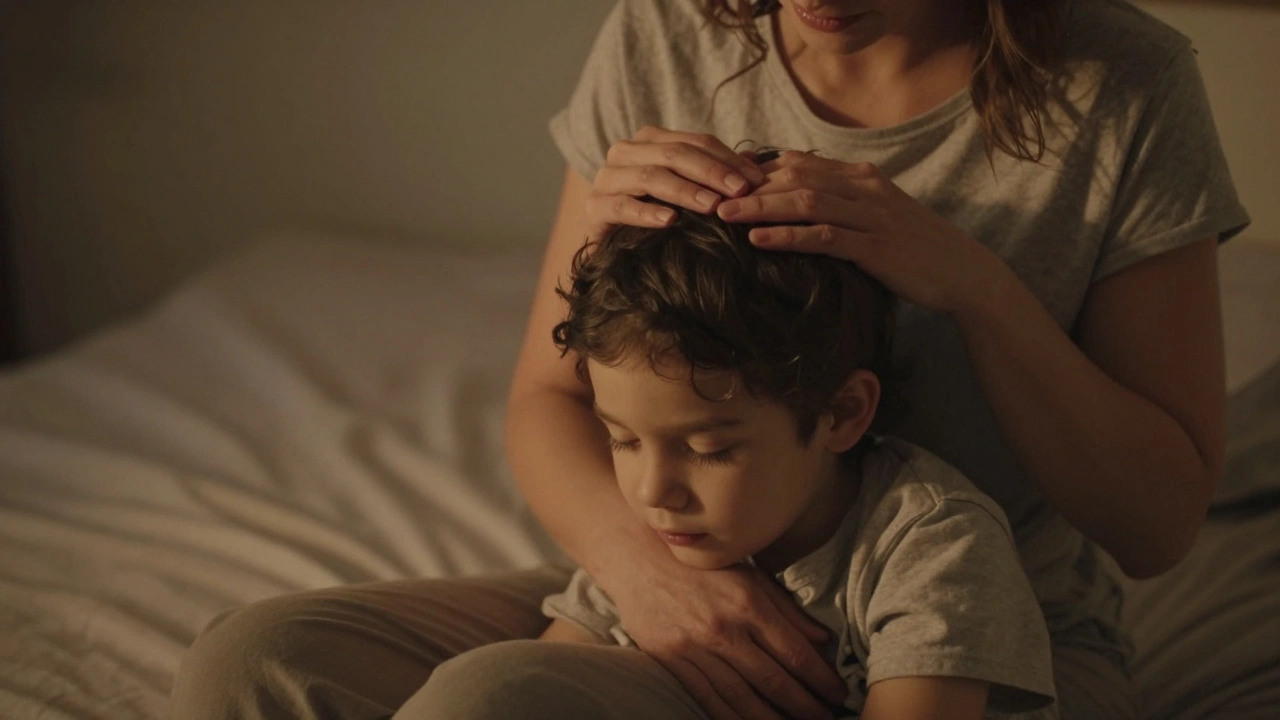
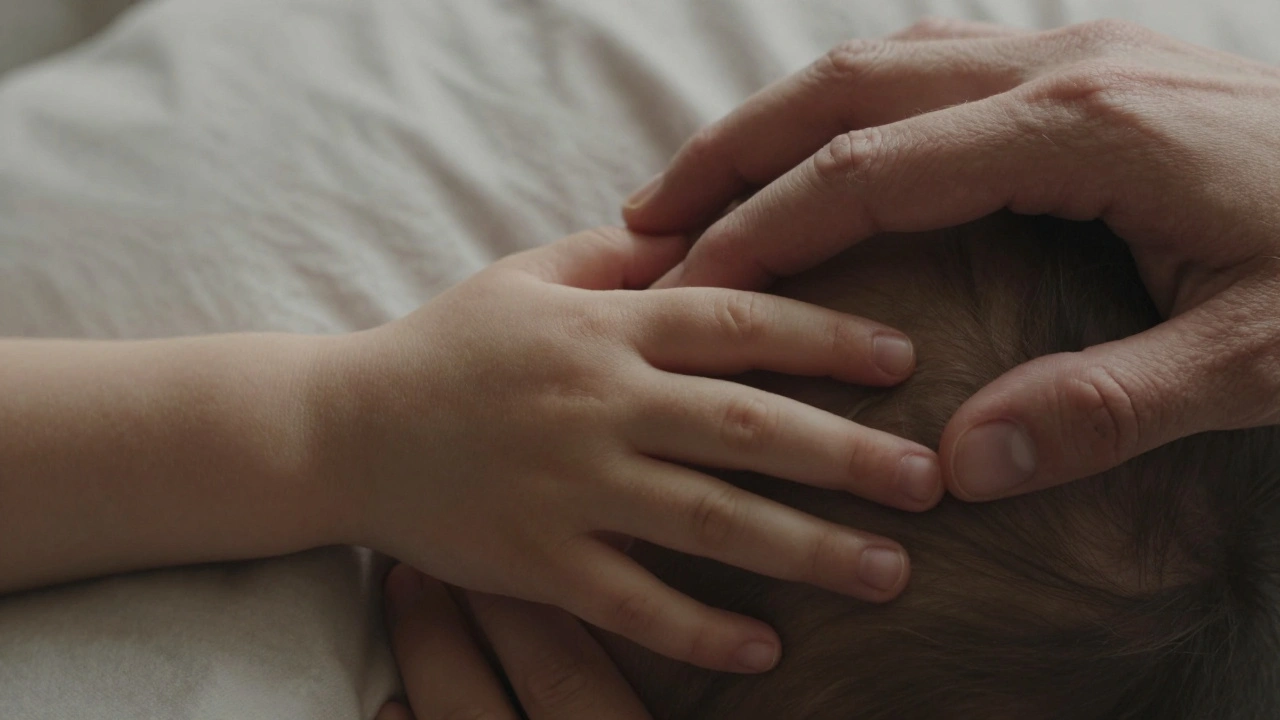
- Use your fingertips. Not your nails. Not your knuckles. Just the pads. Light, circular motions on the scalp - like you’re washing a cat that doesn’t hate you.
- Move to the temples. Gentle circles. Not pressing. Not rubbing. Just… touching. Like you’re testing the warmth of a baby’s forehead.
- Finish at the base of the skull. Two fingers, slow pressure. You’re not trying to crack anything. You’re just telling their nervous system: It’s safe. You can shut down now.
Do this for 5-10 minutes. No more. If they squirm? Stop. Try again tomorrow. Consistency beats intensity every time.
And no - you don’t need a massage oil. Kids’ skin is thin. Too much lotion? They’ll feel sticky. Too much scent? They’ll gag. Just clean hands. That’s all.
Why It’s So Popular (And Why You’re Late to the Party)
Parents in London, Berlin, and Tokyo have been doing this for years. It’s not new. It’s just quiet.
Here’s what’s happening behind the scenes:
- It triggers the parasympathetic nervous system - the ‘rest and digest’ switch. No meds. No apps. Just touch.
- It reduces melatonin suppression from blue light. Your kid’s phone isn’t the only thing keeping them up. Their brain is stuck in ‘alert’ mode. This helps reset it.
- It builds emotional security. When you touch them this way, they learn: My parent’s hands are safe. I don’t have to fight sleep.
And here’s the kicker: it’s free. No subscription. No app. No Amazon Prime delivery. Just you, your hands, and a quiet room.
Compare that to a pediatric sleep coach - £800 for a 4-week plan. Or melatonin gummies - £25 a bottle, with zero long-term studies on kids under 10. This? Zero cost. Zero risk. Maximum reward.
Why It’s Better Than Everything Else You’ve Tried
You’ve tried weighted blankets. They hate them.
You’ve tried lavender sprays. They sneeze.
You’ve tried ‘screen curfews’. They cry like you stole their Wi-Fi.
Head massage? It doesn’t fight their energy. It meets it. And gently, slowly, it redirects it.
One mum in Camden told me her 7-year-old used to scream for 45 minutes before bed. After two weeks of nightly head rubs? Now he falls asleep in under 8 minutes. And he asks for it. “Mum, my head’s buzzing. Can you fix it?”
That’s not a miracle. That’s neurology.
And here’s what nobody tells you: you get something too. While you’re rubbing their scalp, your own heart rate drops. Your breathing slows. You’re not just helping them - you’re resetting yourself.
This isn’t a parenting hack. It’s a quiet rebellion against the overstimulated world we’ve built.
What Emotion Will You Feel? (The Real Payoff)
You won’t feel euphoria. You won’t feel high. You’ll feel something deeper.
Peace.
Not the kind you get from a glass of wine. Not the kind you get from scrolling. This is the kind you get when you touch someone - really touch them - and they melt into you.
You’ll notice your kid’s eyes get heavy. Their jaw unclenches. Their fingers stop twitching. Their breathing goes deep. And then - silence.
That’s not sleep. That’s surrender.
And you? You’ll feel like you just did something meaningful. Not because it was hard. But because it was simple. And real.
That’s the emotion. That’s the reward.
And if you do this for 30 days? You’ll start noticing things. They laugh more. They cry less. They don’t cling to you like you’re their last life raft. They trust you. Not because you bought them the right toy. But because you showed up - quietly - with your hands.
When It Won’t Work (And What to Do)
It won’t work if:
- You’re distracted. No phone. No TV. No thinking about tomorrow’s meeting.
- You rush it. 30 seconds won’t do anything. 5 minutes is the floor.
- You force it. If they pull away? Don’t push. Try again tomorrow.
- You expect instant results. This isn’t a fix. It’s a rhythm.
If they’re still wide awake after 10 days? Talk to their pediatrician. There might be something deeper - anxiety, sensory overload, sleep apnea. This isn’t a cure-all. It’s a tool.
But for 80% of kids? It’s the missing piece.